Deep Structural Education Reforms Needed Beyond Curriculum Changes to Address Inequality and AI Challenges – PM Harini Amarasuriya
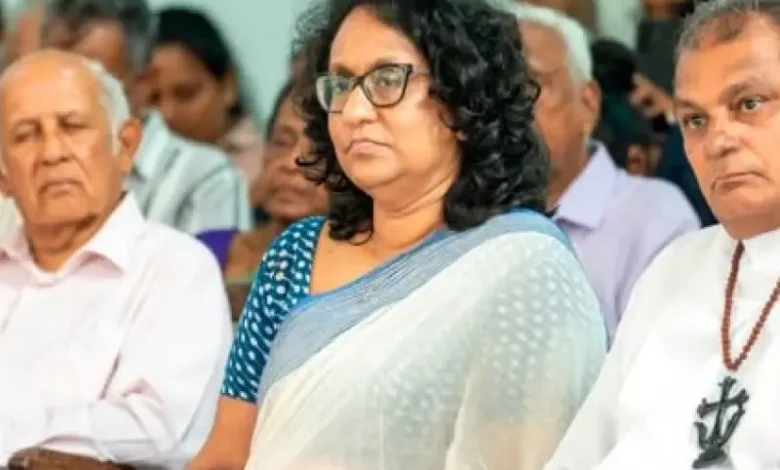
Prime Minister Harini Amarasuriya has stated that deep structural reforms in education, going beyond curriculum revisions, are essential to address rising inequality and the challenges posed by artificial intelligence (AI).
She made these remarks while delivering the Archbishop Cyril Abeynaike Memorial Lecture held on May 30 at the Cathedral of Christ the Living Saviour in Colombo, upon the invitation of Archbishop Dushantha Rodrigo.
Speaking on the theme “Shaping the Future of Education in Sri Lanka and Beyond in the 21st Century,” the Prime Minister emphasized the importance of Sri Lanka’s religious harmony and social diversity in shaping the education system.
Referring to the historical development of education policy in Sri Lanka, she cited a 1971 International Labour Organization (ILO) report highlighting the mismatch between skills and job opportunities, as well as a tendency toward waiting for public sector employment, which has contributed to broader economic challenges.
She noted that although STEM education and technical skill development have been prioritized for decades, they have not been sufficient to resolve structural economic issues.
The Prime Minister also stressed that free education should not only aim to produce a workforce but also develop critically thinking, politically aware, and ethically grounded citizens capable of strengthening democracy.
She identified five key challenges in the education system:
- Inequality between educational institutions
- Weak development of socially responsible citizens
- Gender gap between educational success and workforce participation
- Need to adapt to technological transformation, including AI
- Treating education merely as a certification tool
She further emphasized the need to strengthen digital literacy and cyber safety to effectively address the challenges of artificial intelligence.
Education, she stated, is a transformative process that helps people understand and change the world. She also highlighted the need to restore the teaching profession as a highly respected career in society.
Finally, she noted that the ultimate goal of education reform should be to produce trustworthy leaders across all sectors of society.