Ebola Virus Outbreak Declared a Global Public Health Emergency by WHO
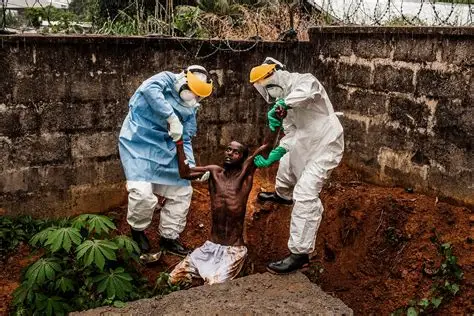
The World Health Organization (WHO) has officially declared the rapidly spreading Ebola virus outbreak in the Democratic Republic of the Congo and Uganda as a “Public Health Emergency of International Concern” (PHEIC) on Sunday.
The outbreak is caused by a specific strain of the virus identified as “Bundibugyo” Ebola virus.
Although vaccines exist for more common Ebola strains such as Ebola-Zaire, there are currently no approved vaccines or specific treatments for the Bundibugyo strain, making the current situation highly critical.
WHO has stated that while the outbreak has not yet reached the level of a global pandemic, countries sharing borders with the Democratic Republic of the Congo are at very high risk.
According to data up to Saturday, 246 suspected infections and 80 suspected deaths have been reported across three health zones in Ituri Province, including Bunia, Ramba, and Mongwalu.
Early laboratory samples indicate a high positivity rate, raising concerns that the actual number of infections could be significantly higher than reported.
WHO has also confirmed that the virus has already crossed international borders. Two individuals traveling from the Democratic Republic of the Congo to Kampala, the capital of Uganda, have tested positive, and one of them has died. In another case, a traveler returning from Ituri Province to Kinshasa also tested positive.
Authorities have imposed a 21-day travel restriction on individuals who have been in contact with infected patients.
Countries have been urged to keep national emergency response systems on high alert and strengthen screening at borders and major internal transit routes.
However, WHO has advised against closing borders or imposing strict trade restrictions, warning that such actions could drive people to use illegal crossing routes, which would severely hinder monitoring and containment efforts.