Electricity Tariffs Can Be Reduced Only by Controlling Generation and Distribution Costs – Deputy Minister of Energy

Deputy Minister of Energy Ilyas Arkam has stated that Sri Lanka’s energy transition cannot rely solely on battery storage systems and that major reforms to the national power grid are essential alongside the expansion of solar and wind power generation.
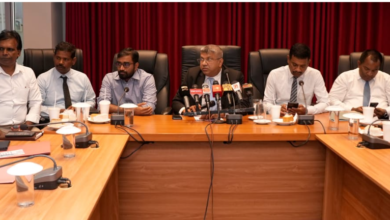
Speaking at a special discussion in Colombo, the Deputy Minister said:
“Batteries are only a medium for storing electricity. The country requires additional sources of solar and wind energy generation.
At present, wind power projects with a combined capacity of around 300 MW are being implemented. Wind turbine components for projects in Mannar have already arrived. Under these plans, a 50 MW project in Mannar and two 50 MW projects in Mullikulam are expected to generate a total of 150 MW of electricity.
In addition, studies are being conducted on floating solar power systems in reservoirs and water bodies. Through floating solar projects, rooftop solar systems, and ground-mounted solar projects, the government expects to add between 200 MW and 250 MW of electricity to the national grid.
Furthermore, a tripartite agreement has been signed with the Asian Development Bank for a 150 MW wind power project.
Through these initiatives, the government plans to integrate approximately 300 MW of renewable energy into the national grid within the next 18 months.
However, increasing generation capacity alone is not sufficient. Significant challenges remain in the country’s electricity transmission and distribution network. There is little benefit in generating more power if it cannot be delivered efficiently to consumers.
Therefore, it is essential to develop new transmission towers and distribution infrastructure.
Since nearly 80 percent of the total cost of the electricity sector comes from power generation expenses, electricity tariffs for consumers can be substantially reduced only by controlling both generation and distribution costs,” he said.