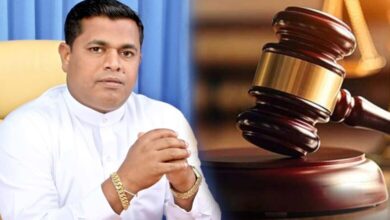
N. Vethanayahan Calls for Preparedness to Face Future Climate Challenges
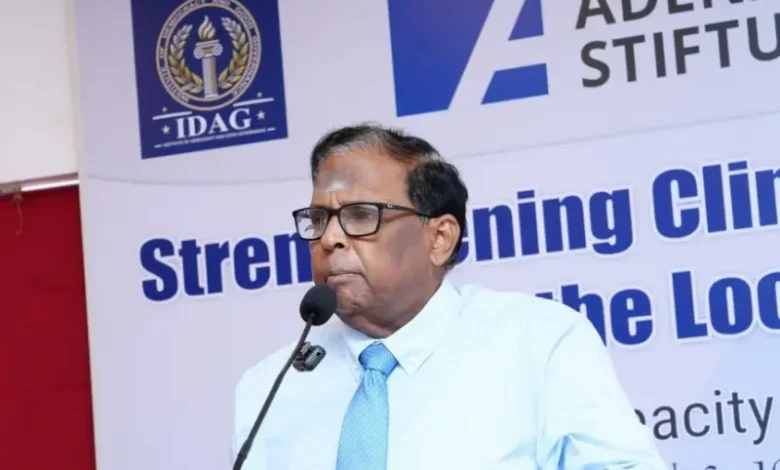
Northern Province Governor N. Vethanayahan stated that local government bodies must rapidly adapt themselves to face the challenges caused by sudden climate changes, emphasizing that it has become a necessity of the time.
He made these remarks while addressing the opening session of a two-day residential workshop on strengthening climate governance at the local government level and promoting climate-sensitive local governance. The programme began on Saturday (09.05.2026) at the Jetwing Hotel in Jaffna.
The workshop was organized jointly by the Institute for Democratic Governance (IDAG) and the Konrad-Adenauer-Stiftung (KAS).
During his speech, the Governor stated that the impacts of climate change are now being directly experienced by the public. He noted that sudden heavy rainfall, floods, and prolonged droughts have gone beyond traditional seasonal forecasts and are now threatening food security.
Referring to the “Dithva” disaster that severely affected the country in November 2025, he said the devastating heavy rains caused destruction across the country, including the Northern Province, within a very short period.
He stressed that such natural disasters are likely to occur more frequently in the future and therefore preparations must be made in advance using lessons and experiences gained from previous disasters.
The Governor also praised local government institutions for their service during the “Dithva” disaster but pointed out the need for long-term structural preparedness rather than temporary responses. He further stated that traditional agricultural methods must also be modernized with new technologies to cope with climate change.
The workshop focuses on chairpersons, opposition members, and council members of local government bodies in the Mullaitivu District. Discussions are expected to cover climate change awareness, major challenges faced by Sri Lanka, and the roles and responsibilities of local government institutions.
In addition, practical guidance will be provided on establishing “Climate Action Committees” within each local authority and improving their operational efficiency.