Champika Ranawaka Proposes Trincomalee-Centered Economic Corridor for Sri Lanka’s Recovery
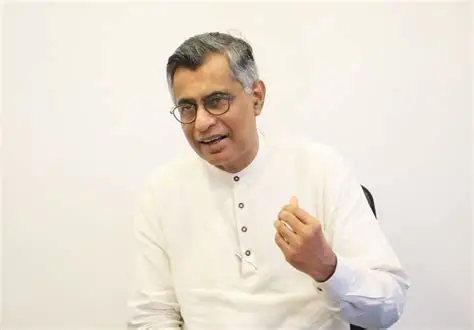
Former Minister Patali Champika Ranawaka stated that Sri Lanka’s future economic recovery depends on creating a new economic corridor centered around Trincomalee rather than focusing solely on Colombo.
He made these remarks while addressing the launch event of his new book, “Ekkada Geduma” (“United Conflict”), held yesterday (25) at the Bandaranaike Memorial International Conference Hall.
The event was attended by former President Chandrika Bandaranaike Kumaratunga, Professor G. L. Peiris, President’s Counsel Ali Sabry, as well as political leaders, intellectuals, and social activists.
During his speech, Ranawaka emphasized that growing strategic competition between the United States and China will shape future global politics. He noted that until 1820, the center of the world economy was in Asia and that global economic influence is once again shifting back toward Asia.
Referring to the book “Monsoon” by Robert D. Kaplan, he stated that the Indian Ocean is emerging as the most important maritime region of the 21st century, and Sri Lanka must plan its future carefully within that context.
Ranawaka argued that Sri Lanka should move away from the traditional Colombo-centered development model. Instead of prioritizing the Colombo-to-Jaffna expressway project, he proposed creating a new economic corridor connecting Colombo, Kurunegala, Dambulla, Habarana, and Trincomalee.
According to him, transforming Trincomalee into a major gateway for Asia would bring significant economic benefits to the country. He also said that while serving as a minister, he had worked with northern and eastern political leaders, including R. Sampanthan, as well as experts from various institutions, to advance similar initiatives.
He further stressed that Sri Lanka’s recovery depends on building direct economic ties with ASEAN countries and strengthening export and industrial sectors. Ranawaka said he continues to support the economic principles outlined in the 2017 National Physical Plan and policy proposals introduced during the administration of former President Mahinda Rajapaksa.
Describing his book as more than just a political publication, Ranawaka said it presents an in-depth analysis of Sri Lanka’s foreign policy and economic structure while also critically examining the imperial strategies of global powers such as the United States and China. He added that the book should be viewed as a policy blueprint capable of shaping Sri Lanka’s future and encouraged readers to engage in deeper political discussion and analysis.