Sri Lanka Highlights Success in Preventing Pesticide-Related Suicides at WHO Conference
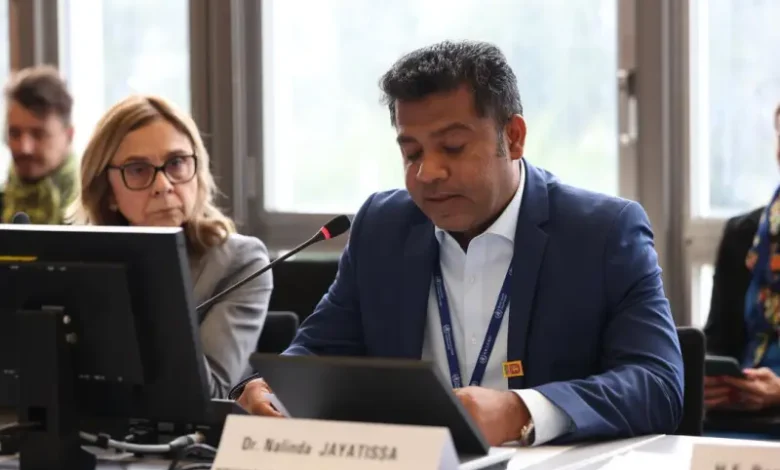
Sri Lanka’s Health and Mass Media Minister stated that the country has made significant progress in preventing suicides caused by pesticides.
The Minister noted that Sri Lanka’s suicide death rate has decreased by nearly 70% since the country introduced phased bans on highly toxic pesticides in the 1990s.
He also proposed that all countries should include pesticide regulation measures in their national suicide prevention strategies.
The remarks were made during a special session titled “Preventing Suicides Caused by Pesticides” held as part of the 79th World Health Assembly of the World Health Organization in Geneva.
The 79th World Health Assembly was attended by health ministers, diplomats, representatives of various organisations, and observers from 194 countries.
The session was jointly organised by Sri Lanka, Guyana, Kenya, Nigeria, and Pakistan, with support from the World Health Organization, the United Nations Environment Programme, and the International Association for Suicide Prevention.
According to the Minister, Sri Lanka’s experience demonstrates that restricting highly toxic pesticides is an effective, evidence-based strategy for reducing suicide deaths. He stressed that pesticide control measures can produce positive results within a short period and at relatively low cost.
The Minister further stated that organisations such as the WHO and UNEP play a vital role in providing technical and policy support to developing countries. He added that Sri Lanka is always ready to share its experiences with other nations.
He also emphasized that pesticide control alone is not enough to prevent suicides, and that community-based healthcare services must also be strengthened. Sri Lanka is currently working to improve its primary healthcare system as part of this effort.
One of the key objectives of the session was to encourage the inclusion of pesticide control policies in WHO guidelines and motivate member states to adopt them within their national strategies.
Sri Lanka is currently considered one of the leading countries in reducing suicide rates globally. The suicide rate, which stood at 47 per 100,000 people in 1995, had dropped to 14 by 2022. The ban on highly toxic pesticides was identified as a major reason for this achievement.
It was also announced that the International Association for Suicide Prevention plans to hold its 34th World Congress on Suicide Prevention in Sri Lanka in 2027.